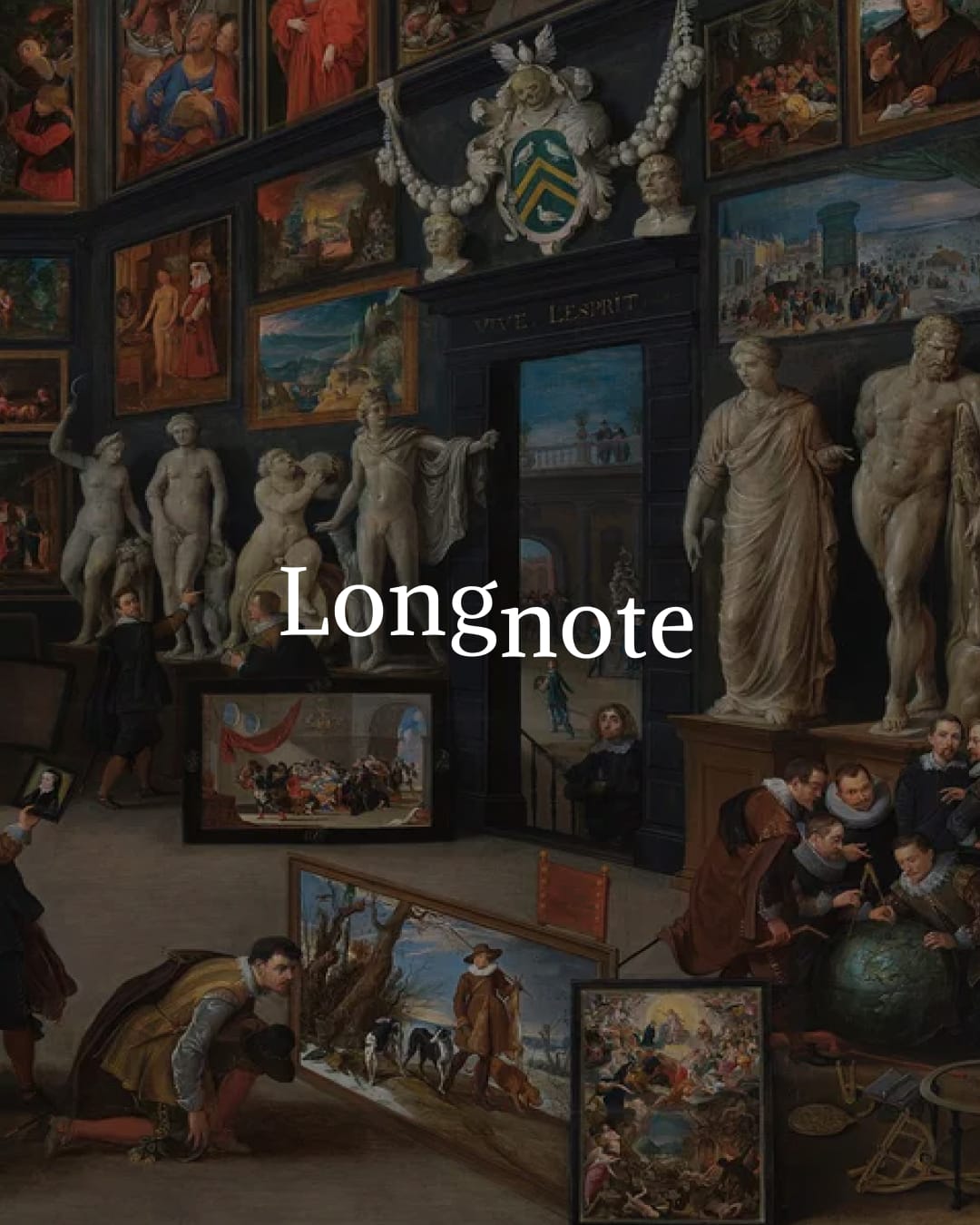
Cabinet of curiosities as a method for seeing
Cabinets of curiosities were private collections built to understand world around us. They gathered objects, specimens, and artefacts, then used arrangement to make meaning visible.
How they worked?
Not one category at a time. Nature beside craft. The local beside the distant. The point was comparison: put things next to each other until a pattern appears.
A cabinet made distance feel close enough to study. They were called wunderkammer, “room of wonders” in German. Not because everything was rare, but because everything raised a question. The cabinet trained the eye before it gave an answer.
Longnote, as an archive of contemporary curiosities across Europe.
Places, people, common culture. The kind of details that make a place feel familiar, even when it is not yours. Long notes that make elsewhere feel less far away, and strangely familiar.